
Practice drills
Practice drills for stronger barbering layers
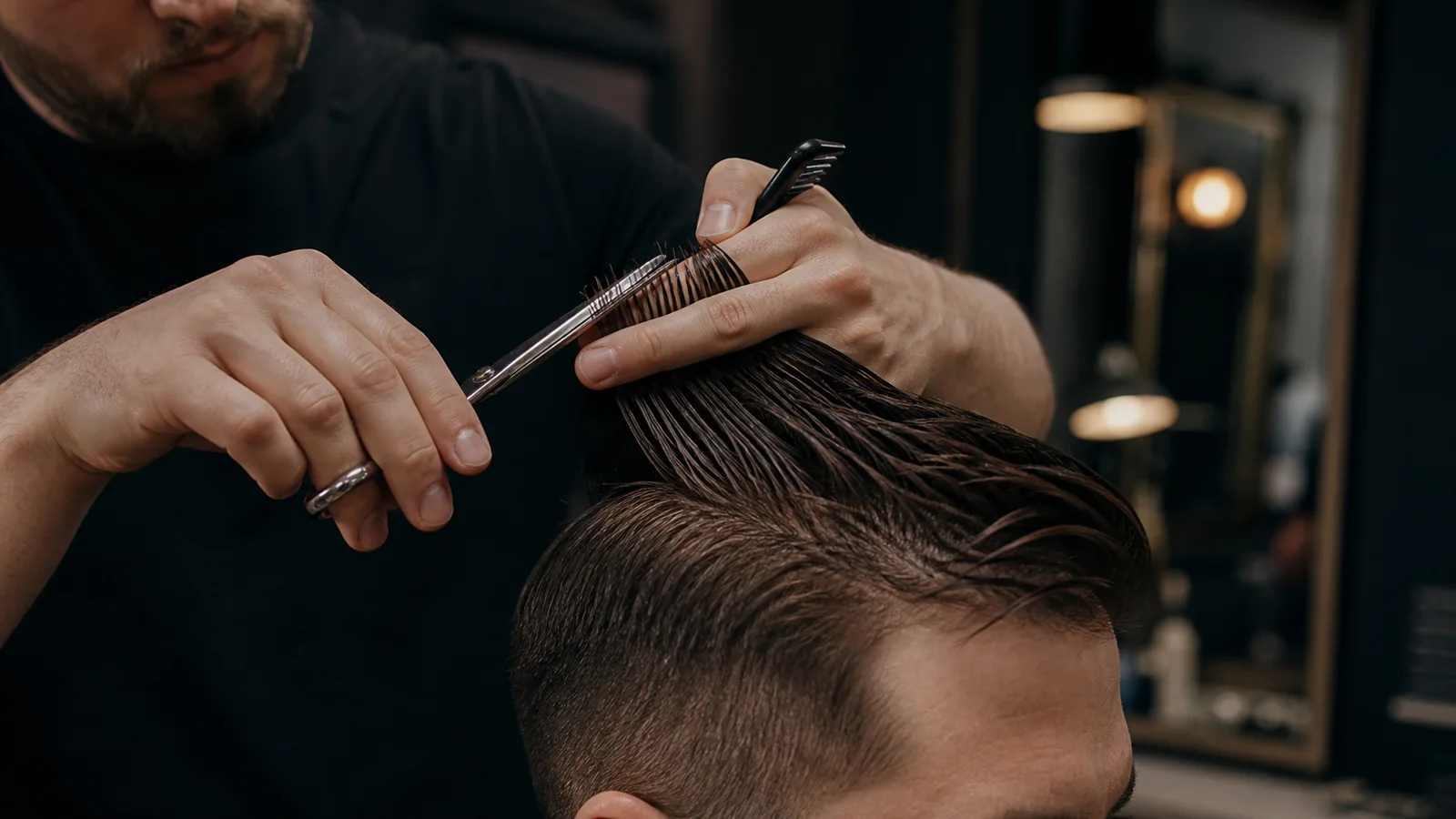
Layering creates internal movement and removes weight while preserving the perimeter and overall design. The goal is to choose a guide, elevation and overdirection pattern that produces a predictable relationship between lengths.
Quick answer
What to remember.
- The goal is to choose a guide, elevation and overdirection pattern that produces a predictable relationship between lengths.
- Define the perimeter and internal shape separately.
- Use stable body position and controlled scissor tips, particularly around the crown, ears and face.
- Well-planned layers support movement, styling flexibility and a shape that grows with less heaviness.
Choose a narrow practice target
Layering creates internal movement and removes weight while preserving the perimeter and overall design. The goal is to choose a guide, elevation and overdirection pattern that produces a predictable relationship between lengths.
Pick one element that can be observed in a short session. Keep the model, tool setting, view and success criterion as consistent as practical.
Run the core drill
Map a simple square, round or triangular layer pattern on a head sheet, execute it on a mannequin and compare the dry silhouette with the plan.
Complete a baseline attempt, one corrected attempt and one repeat. Photograph or record only what is permitted and useful for comparison.
- Define the perimeter and internal shape separately.
- Choose a stationary or travelling guide deliberately.
- Keep overdirection consistent through matching zones.
- Dry and move the hair before refining internal weight.
Add a constraint only after control
Once the basic sequence is repeatable, vary one condition such as viewing angle, timing, density or scenario. Avoid Following a lost guide by cutting shorter and shorter.; Layering without protecting the front or perimeter length.; Using inconsistent tension around changes in density..
If the outcome changes, identify which variable caused it before adding another challenge.
Debrief the evidence
Use stable body position and controlled scissor tips, particularly around the crown, ears and face.
Write one sentence for the plan, one for the observed result and one for the next attempt.
- The guide remains identifiable through the pattern.
- Internal movement supports the planned silhouette.
- The perimeter retains the agreed length and density.
Sydney training context
How this topic fits into Sydney barber school training
When reviewing a Sydney barber school, turn practice drills for stronger barbering layers into a provider question rather than accepting a broad promise. Find out who teaches it, how often students repeat it and how the result is reviewed.
The phrase “best barber school” is not an objective accreditation or a guaranteed outcome. The best choice for someone who wants to learn practical barbering skills depends on program status, supervised practice, trainer feedback, safety, total cost and fit with their intended pathway.
A barber academy in Sydney should describe its program status honestly, explain its safety boundaries and show how trainer feedback changes a learner’s next attempt.
For a transparent example, review The Guild's private barber training program in Sydney, including its curriculum, A$5,000 fee and non-accredited status.
The Guild
Build the skill through corrected repetition.
Explore The Guild’s private 12-week curriculum and see how practical lessons, feedback and supervised training fit together.
View the curriculum →