Beginner guide
Beard neckline and cheek line: a beginner’s guide
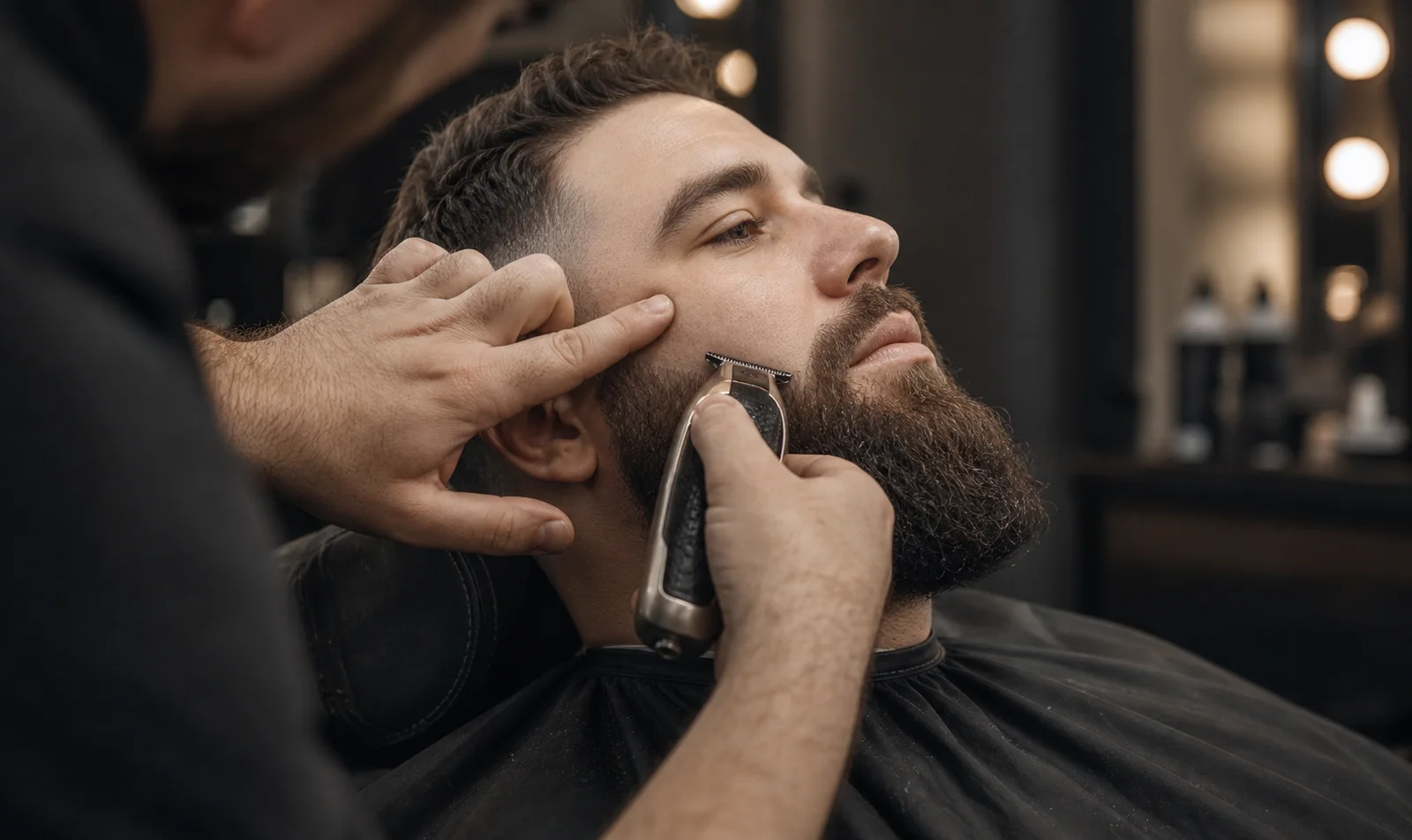
The neckline and cheek line frame the beard; their height and curvature strongly affect how full or artificial the result appears. The goal is to choose lines that suit growth, face structure and the maintenance the client is willing to perform.
Quick answer
What to remember.
- The goal is to choose lines that suit growth, face structure and the maintenance the client is willing to perform.
- Mark the intended boundary before cutting into it.
- Stretch skin only as trained and appropriate, use clean equipment and avoid compromised or inflamed areas.
- Well-placed boundaries make the beard look fuller and keep home maintenance understandable.
Why beard neckline and cheek line matters
The neckline and cheek line frame the beard; their height and curvature strongly affect how full or artificial the result appears.
The goal is to choose lines that suit growth, face structure and the maintenance the client is willing to perform.
Well-placed boundaries make the beard look fuller and keep home maintenance understandable. This is why the skill belongs in a complete service process rather than being treated as an isolated trick.
Four principles to learn first
Use these principles as checkpoints. Work on one at a time until you can explain what it changes in the result.
- Mark the intended boundary before cutting into it.
- Use natural landmarks without treating them as rigid rules.
- Preserve density where the line needs visual support.
- Check both lines with the head in a neutral position.
Practise it safely and deliberately
Draw several line options on face templates, explain the visual effect of each and practise creating a clean boundary on a mannequin in small increments. Keep the conditions consistent enough to compare attempts, and ask a trainer to observe the part of the process you cannot see yourself.
Stretch skin only as trained and appropriate, use clean equipment and avoid compromised or inflamed areas. A faster attempt is not progress if control, hygiene, consent or client comfort falls away.
What early progress looks like
Look for repeatability before speed. A strong beginner can recognise the plan, follow it and explain where the result changed.
- The neckline remains hidden naturally from the front.
- Cheek lines support rather than expose density gaps.
- Both boundaries connect into the overall shape.
Sydney training context
How this topic fits into Sydney barber school training
A Sydney barber school comparison becomes more useful when it tests a real skill such as beard neckline and cheek line: a beginner’s guide. Ask each provider what beginners practise, how mistakes are corrected and what safe performance looks like.
The phrase “best barber school” is not an objective accreditation or a guaranteed outcome. The best choice for someone who wants to learn practical barbering skills depends on program status, supervised practice, trainer feedback, safety, total cost and fit with their intended pathway.
Barber classes in Sydney vary in pace, scope and supervision. Ask how much corrected practice each learner receives and exactly what any certificate represents.
For a transparent example, review The Guild's private barber training program in Sydney, including its curriculum, A$5,000 fee and non-accredited status.
The Guild
Build the skill through corrected repetition.
Explore The Guild’s private 12-week curriculum and see how practical lessons, feedback and supervised training fit together.
View the curriculum →