
Troubleshooting
Beard shape and balance troubleshooting guide
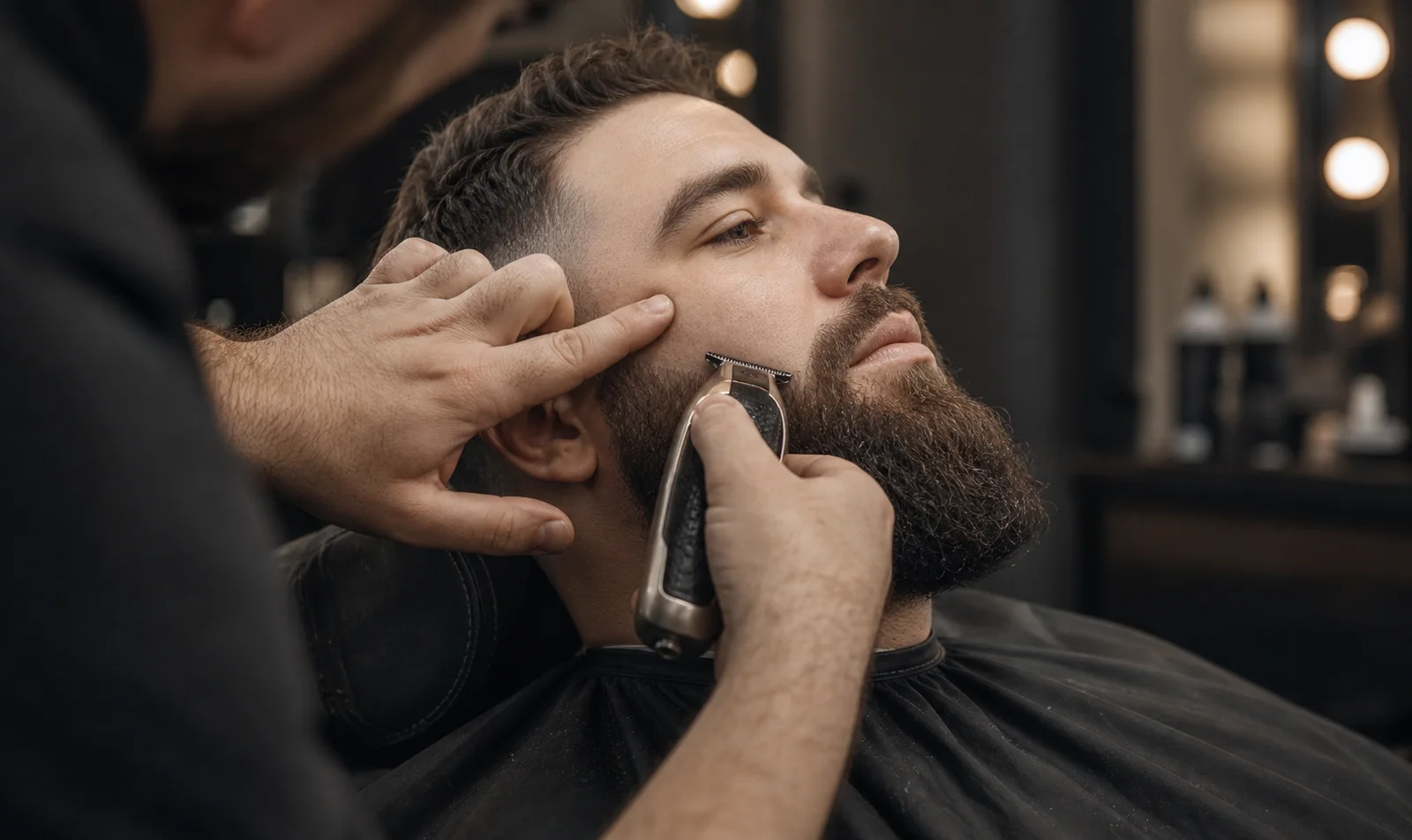
Beard shaping uses length distribution and outline to support the face while respecting natural density and growth. The goal is a balanced silhouette that reads clean from the front, profile and underneath.
Quick answer
What to remember.
- The goal is a balanced silhouette that reads clean from the front, profile and underneath.
- Establish the intended front shape before refining details.
- Use guards and controlled tool angles around loose skin, and stop if the skin shows irritation.
- Balanced shaping makes the beard look intentional and easier to maintain between visits.
1. Describe what you can observe
Beard shaping uses length distribution and outline to support the face while respecting natural density and growth. Start with what is visible, audible or repeatable—not a judgement such as “it looks bad”.
Use the intended outcome as the reference: The goal is a balanced silhouette that reads clean from the front, profile and underneath.
2. Isolate the variable
Check the plan, setup and sequence before changing several things at once. The four most useful reference points for this topic are:
- Establish the intended front shape before refining details.
- Protect density in naturally sparse areas.
- Compare left and right from the same head position.
- Check the lower silhouette from profile and underneath.
3. Test the smallest correction
Common causes include Chasing perfect symmetry by repeatedly shortening the fuller side.; Hollowing the jaw corners until the beard loses structure.; Detailing lines before the internal bulk is balanced.. Choose the most likely one and test a limited correction where the result can still be controlled.
Map three beard silhouettes on face charts, then shape a mannequin beard using front, profile and underside checkpoints.
4. Review and escalate when needed
Compare the result against these signals: The silhouette supports the agreed face proportions.; Both profiles carry comparable visual weight.; Sparse areas have not been exposed unnecessarily.. If the evidence does not improve, stop repeating the same action and ask for another observation.
Use guards and controlled tool angles around loose skin, and stop if the skin shows irritation.
Sydney training context
How this topic fits into Sydney barber school training
A Sydney barber school comparison becomes more useful when it tests a real skill such as beard shape and balance troubleshooting guide. Ask each provider what beginners practise, how mistakes are corrected and what safe performance looks like.
The phrase “best barber school” is not an objective accreditation or a guaranteed outcome. The best choice for someone who wants to learn practical barbering skills depends on program status, supervised practice, trainer feedback, safety, total cost and fit with their intended pathway.
Barber classes in Sydney vary in pace, scope and supervision. Ask how much corrected practice each learner receives and exactly what any certificate represents.
For a transparent example, review The Guild's private barber training program in Sydney, including its curriculum, A$5,000 fee and non-accredited status.
The Guild
Build the skill through corrected repetition.
Explore The Guild’s private 12-week curriculum and see how practical lessons, feedback and supervised training fit together.
View the curriculum →