
Mentor questions
Questions to ask your barber trainer about choosing barber training models
Training models should match the learner’s current objective, supervision level and ability to deliver the agreed service safely. The goal is gradual variety without using a real person as an uncontrolled experiment.
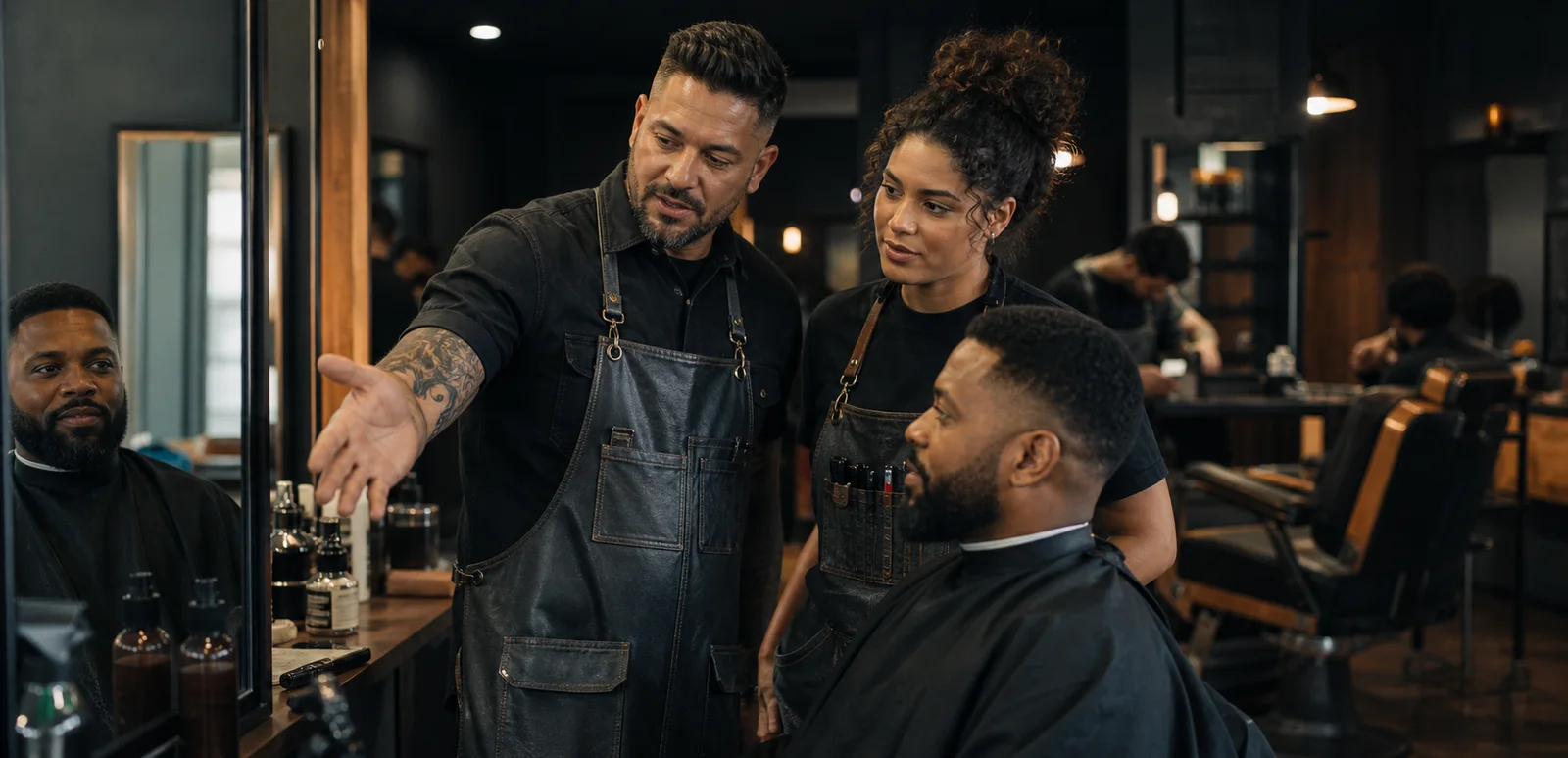
Quick answer
What to remember.
- The goal is gradual variety without using a real person as an uncontrolled experiment.
- Define the exact skill and service before recruiting.
- Use clear consent, privacy and hygiene procedures; postpone work that exceeds competence or safe supervision.
- Appropriate model selection protects trust and gives the learner a fair chance to practise the intended skill.
Questions about the plan
Training models should match the learner’s current objective, supervision level and ability to deliver the agreed service safely. Ask questions that reveal the decision behind the movement, not only which tool to pick.
- What result should choosing barber training models create in this service?
- Which starting condition changes the plan most?
- What should I check before I begin?
Questions during the attempt
Use these principles as context: Define the exact skill and service before recruiting. Screen hair, scalp, timing and requested outcome. Explain the training context and obtain informed consent. Confirm trainer availability and a recovery plan.
- What evidence tells me to continue, change or stop?
- Which variable should I change first?
- Where is my movement or sequence becoming inconsistent?
Questions when the result is off
Bring a specific observation. Likely errors to rule out include Choosing the most complex transformation for early practice.; Promising a result before assessing suitability.; Using social pressure instead of clear voluntary consent..
- What do you see that I have not described?
- What is the smallest safe correction available?
- Should this be corrected now or protected from further work?
Turn the answer into the next attempt
Create model briefs for beginner, developing and advanced sessions, including inclusion criteria, exclusions, expected time and supervision. Use clear consent, privacy and hygiene procedures; postpone work that exceeds competence or safe supervision.
Review the attempt against these signals: The model matches the stated learning objective.; Consent includes the training context and likely duration.; A supervisor and contingency plan are confirmed.. Record the trainer’s answer in your own words and test one change while the context is fresh.
Sydney training context
How this topic fits into Sydney barber school training
Someone choosing a Sydney barber school can use this guide to ask better questions about questions to ask your barber trainer about choosing barber training models. The provider should be able to describe the learning sequence, trainer support and limits around client work.
The phrase “best barber school” is not an objective accreditation or a guaranteed outcome. The best choice for someone who wants to learn practical barbering skills depends on program status, supervised practice, trainer feedback, safety, total cost and fit with their intended pathway.
If your aim is to learn barbering in Sydney, connect each course claim to an observable learning condition: practice time, model suitability, individual correction and realistic progression.
For a transparent example, review The Guild's private barber training program in Sydney, including its curriculum, A$5,000 fee and non-accredited status.
The Guild
Build the skill through corrected repetition.
Explore The Guild’s private 12-week curriculum and see how practical lessons, feedback and supervised training fit together.
View the curriculum →