
Practice drills
Practice drills for stronger receiving barber trainer feedback
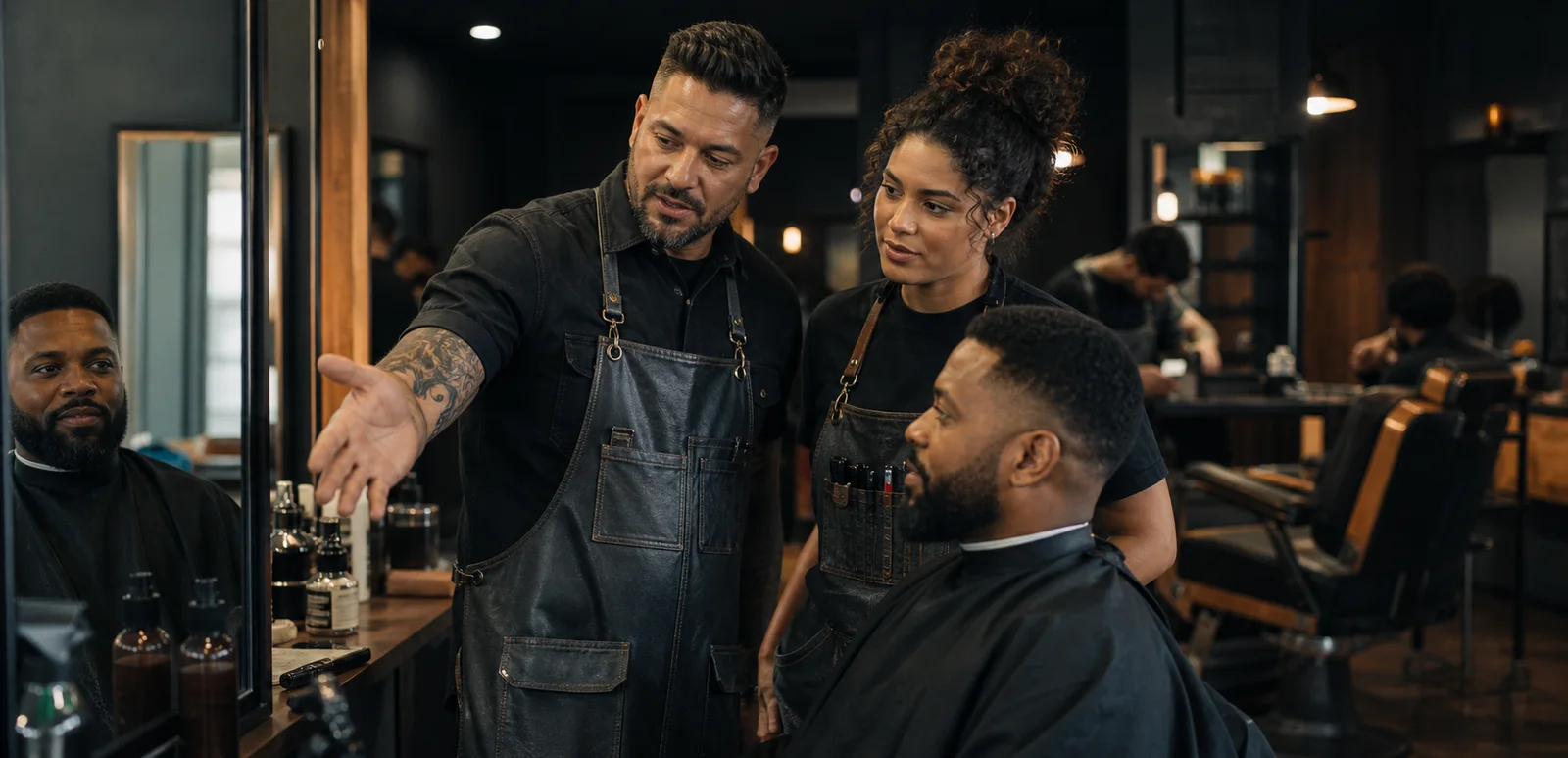
Useful feedback becomes action when a learner can identify the evidence, restate the correction and test it promptly. The goal is to turn instruction into one specific change rather than collecting comments without applying them.
Quick answer
What to remember.
- The goal is to turn instruction into one specific change rather than collecting comments without applying them.
- Listen to the complete observation before explaining.
- Pause immediately when feedback identifies a safety risk; safety corrections take priority over completing the technical sequence.
- Learners who use feedback well correct problems sooner and create a safer, more consistent service.
Choose a narrow practice target
Useful feedback becomes action when a learner can identify the evidence, restate the correction and test it promptly. The goal is to turn instruction into one specific change rather than collecting comments without applying them.
Pick one element that can be observed in a short session. Keep the model, tool setting, view and success criterion as consistent as practical.
Run the core drill
After a trainer observation, write the evidence, the single next action and the result of the next attempt in three short lines.
Complete a baseline attempt, one corrected attempt and one repeat. Photograph or record only what is permitted and useful for comparison.
- Listen to the complete observation before explaining.
- Ask which result or movement shows the issue.
- Restate the correction in your own words.
- Apply it to the next small attempt while the context is fresh.
Add a constraint only after control
Once the basic sequence is repeatable, vary one condition such as viewing angle, timing, density or scenario. Avoid Treating correction as a judgement of personal talent.; Asking for several fixes and remembering none.; Nodding without checking what to change physically..
If the outcome changes, identify which variable caused it before adding another challenge.
Debrief the evidence
Pause immediately when feedback identifies a safety risk; safety corrections take priority over completing the technical sequence.
Write one sentence for the plan, one for the observed result and one for the next attempt.
- The learner can name the observable issue.
- The next attempt includes the stated change.
- Progress notes show whether the change worked.
Sydney training context
How this topic fits into Sydney barber school training
When reviewing a Sydney barber school, turn practice drills for stronger receiving barber trainer feedback into a provider question rather than accepting a broad promise. Find out who teaches it, how often students repeat it and how the result is reviewed.
The phrase “best barber school” is not an objective accreditation or a guaranteed outcome. The best choice for someone who wants to learn practical barbering skills depends on program status, supervised practice, trainer feedback, safety, total cost and fit with their intended pathway.
A barber academy in Sydney should describe its program status honestly, explain its safety boundaries and show how trainer feedback changes a learner’s next attempt.
For a transparent example, review The Guild's private barber training program in Sydney, including its curriculum, A$5,000 fee and non-accredited status.
The Guild
Build the skill through corrected repetition.
Explore The Guild’s private 12-week curriculum and see how practical lessons, feedback and supervised training fit together.
View the curriculum →