
Beginner guide
Scissor-over-comb: a beginner’s guide
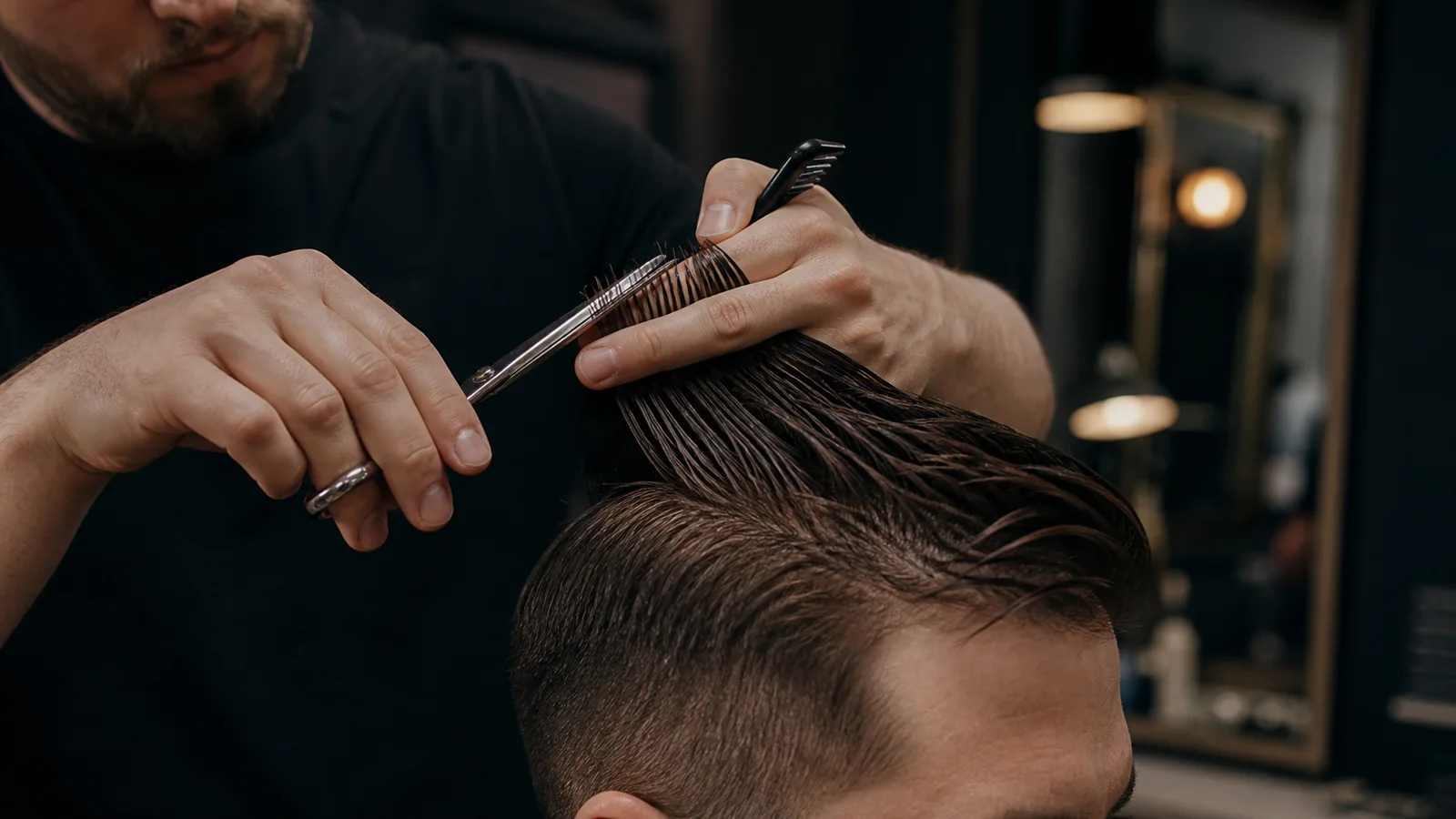
Scissor-over-comb refines short graduation by using the comb as a moving guide between the head and scissors. The goal is to present a small, controlled amount of hair and cut to the shape without gouging or creating steps.
Quick answer
What to remember.
- The goal is to present a small, controlled amount of hair and cut to the shape without gouging or creating steps.
- Keep the comb moving in small, readable increments.
- Keep scissor tips controlled around ears and facial features, and close the blades before changing position.
- Controlled scissor-over-comb creates a softer tailored finish and reduces harsh clipper marks.
Why scissor-over-comb matters
Scissor-over-comb refines short graduation by using the comb as a moving guide between the head and scissors.
The goal is to present a small, controlled amount of hair and cut to the shape without gouging or creating steps.
Controlled scissor-over-comb creates a softer tailored finish and reduces harsh clipper marks. This is why the skill belongs in a complete service process rather than being treated as an isolated trick.
Four principles to learn first
Use these principles as checkpoints. Work on one at a time until you can explain what it changes in the result.
- Keep the comb moving in small, readable increments.
- Cut only the hair clearly presented beyond the comb.
- Match comb angle to the desired silhouette.
- Work with light rhythm and frequent visual checks.
Practise it safely and deliberately
Practise lifting consistent panels with the comb first, then cut a mannequin zone using short sequences followed by a step-back check. Keep the conditions consistent enough to compare attempts, and ask a trainer to observe the part of the process you cannot see yourself.
Keep scissor tips controlled around ears and facial features, and close the blades before changing position. A faster attempt is not progress if control, hygiene, consent or client comfort falls away.
What early progress looks like
Look for repeatability before speed. A strong beginner can recognise the plan, follow it and explain where the result changed.
- The surface reads even from multiple angles.
- The comb angle stays consistent through a planned zone.
- No local gouges appear from overloading the comb.
Sydney training context
How this topic fits into Sydney barber school training
Before selecting a Sydney barber school, ask how the program develops scissor-over-comb: a beginner’s guide from explanation to controlled practice. Specific answers are more useful than a long list of techniques with no detail about feedback.
The phrase “best barber school” is not an objective accreditation or a guaranteed outcome. The best choice for someone who wants to learn practical barbering skills depends on program status, supervised practice, trainer feedback, safety, total cost and fit with their intended pathway.
People who want to become a barber in Sydney should check current qualification and employment requirements separately from the marketing of any short course.
For a transparent example, review The Guild's private barber training program in Sydney, including its curriculum, A$5,000 fee and non-accredited status.
The Guild
Build the skill through corrected repetition.
Explore The Guild’s private 12-week curriculum and see how practical lessons, feedback and supervised training fit together.
View the curriculum →