
Client experience
How scissor-over-comb improves the client experience
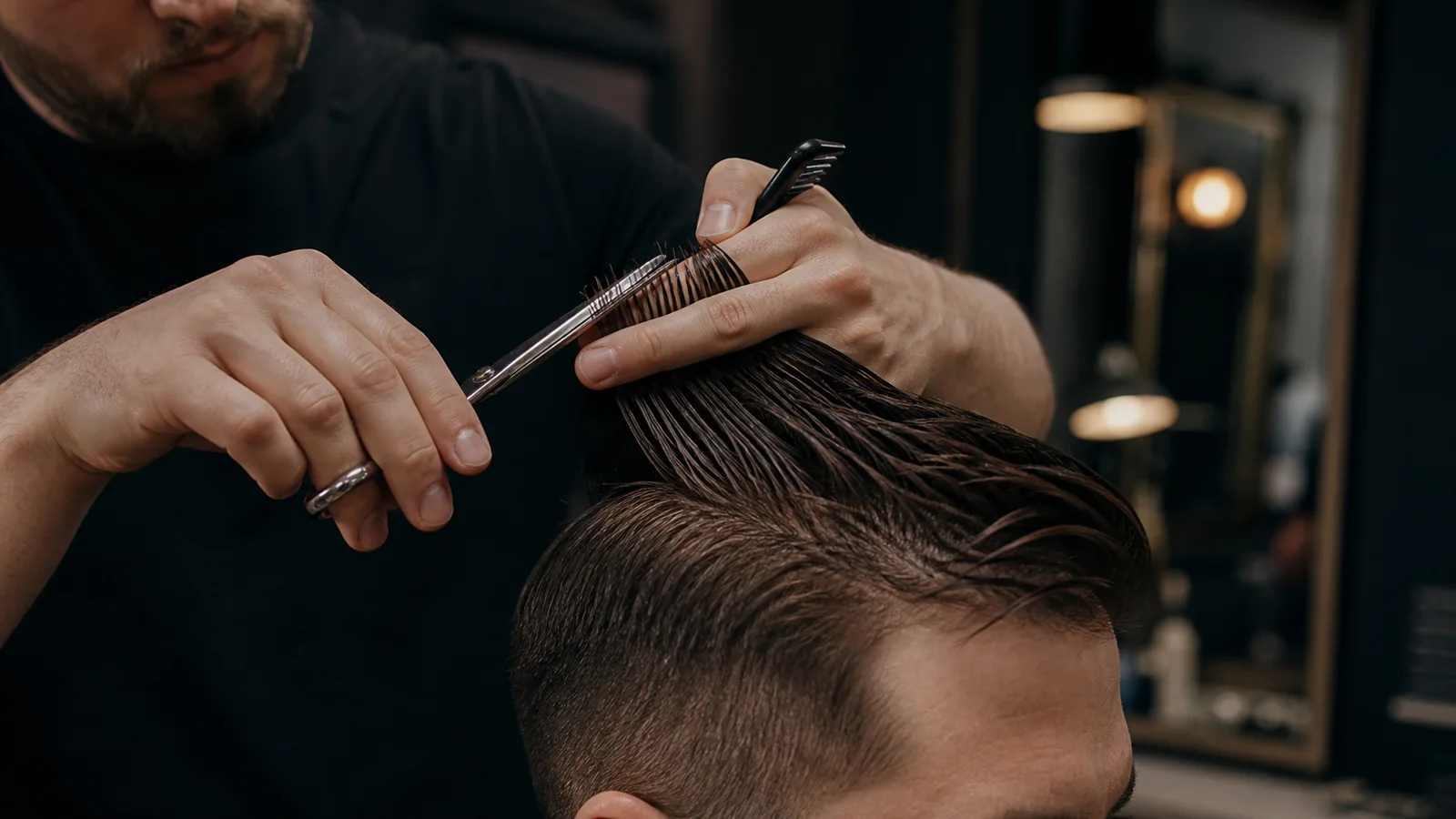
Scissor-over-comb refines short graduation by using the comb as a moving guide between the head and scissors. The goal is to present a small, controlled amount of hair and cut to the shape without gouging or creating steps.
Quick answer
What to remember.
- The goal is to present a small, controlled amount of hair and cut to the shape without gouging or creating steps.
- Keep the comb moving in small, readable increments.
- Keep scissor tips controlled around ears and facial features, and close the blades before changing position.
- Controlled scissor-over-comb creates a softer tailored finish and reduces harsh clipper marks.
The client value behind the technique
Controlled scissor-over-comb creates a softer tailored finish and reduces harsh clipper marks.
Scissor-over-comb refines short graduation by using the comb as a moving guide between the head and scissors. The client may not use the technical vocabulary, but they experience the result through comfort, clarity and how the work performs after leaving the shop.
Set expectations before the work
Explain the part of the plan affected by scissor-over-comb in plain language. The goal is to present a small, controlled amount of hair and cut to the shape without gouging or creating steps.
Confirm what the client will see, feel or need to maintain, and invite questions before a decision becomes irreversible.
Protect comfort during the service
Keep scissor tips controlled around ears and facial features, and close the blades before changing position.
Check in at meaningful moments without making the client responsible for technical supervision. If the plan changes, explain the reason and obtain agreement.
- Keep the comb moving in small, readable increments.
- Cut only the hair clearly presented beyond the comb.
- Match comb angle to the desired silhouette.
- Work with light rhythm and frequent visual checks.
Finish with a useful handover
Show the result using the same words used during consultation. Review these quality signals: The surface reads even from multiple angles.; The comb angle stays consistent through a planned zone.; No local gouges appear from overloading the comb..
Give only the maintenance information that matters for this client, and record relevant preferences with appropriate permission.
Sydney training context
How this topic fits into Sydney barber school training
Someone choosing a Sydney barber school can use this guide to ask better questions about how scissor-over-comb improves the client experience. The provider should be able to describe the learning sequence, trainer support and limits around client work.
The phrase “best barber school” is not an objective accreditation or a guaranteed outcome. The best choice for someone who wants to learn practical barbering skills depends on program status, supervised practice, trainer feedback, safety, total cost and fit with their intended pathway.
If your aim is to learn barbering in Sydney, connect each course claim to an observable learning condition: practice time, model suitability, individual correction and realistic progression.
For a transparent example, review The Guild's private barber training program in Sydney, including its curriculum, A$5,000 fee and non-accredited status.
The Guild
Build the skill through corrected repetition.
Explore The Guild’s private 12-week curriculum and see how practical lessons, feedback and supervised training fit together.
View the curriculum →