
Lesson plan
A practical lesson plan for scissor-over-comb
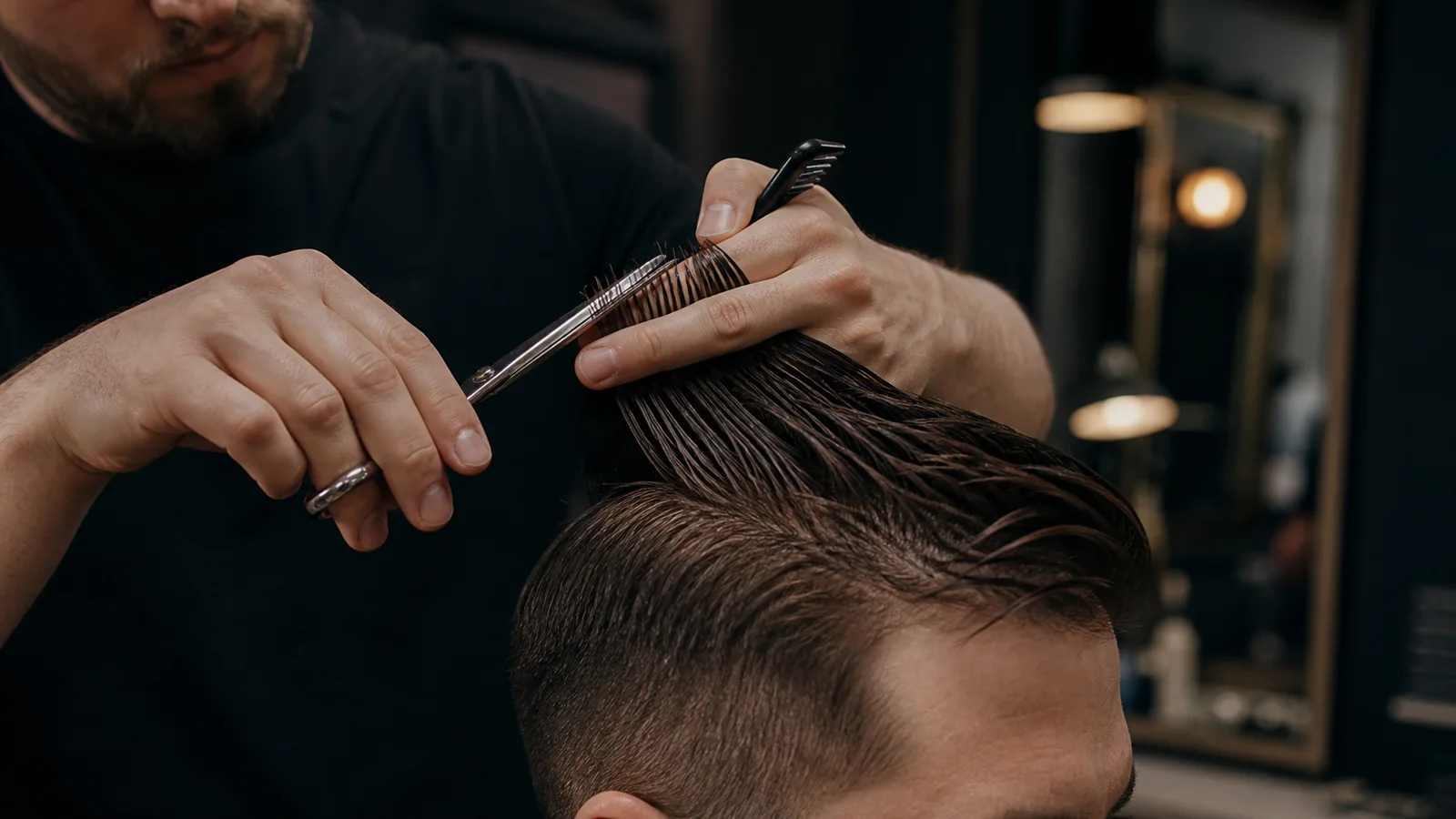
Scissor-over-comb refines short graduation by using the comb as a moving guide between the head and scissors. The goal is to present a small, controlled amount of hair and cut to the shape without gouging or creating steps.
Quick answer
What to remember.
- The goal is to present a small, controlled amount of hair and cut to the shape without gouging or creating steps.
- Keep the comb moving in small, readable increments.
- Keep scissor tips controlled around ears and facial features, and close the blades before changing position.
- Controlled scissor-over-comb creates a softer tailored finish and reduces harsh clipper marks.
Set one observable lesson outcome
Scissor-over-comb refines short graduation by using the comb as a moving guide between the head and scissors. The goal is to present a small, controlled amount of hair and cut to the shape without gouging or creating steps.
Write the outcome as something a trainer can see or hear. Avoid goals such as “understand it better”; name the movement, decision, sequence or finished feature the learner should reproduce.
Demonstrate the decision as well as the action
The trainer should name what they are looking at, which option they choose and how they will know when to stop. The learner then repeats the decision before copying the movement.
- Keep the comb moving in small, readable increments.
- Cut only the hair clearly presented beyond the comb.
- Match comb angle to the desired silhouette.
- Work with light rhythm and frequent visual checks.
Move from guided to independent practice
Begin with this controlled exercise: Practise lifting consistent panels with the comb first, then cut a mannequin zone using short sequences followed by a step-back check.
Watch specifically for Loading too much hair into the comb.; Closing the scissors against a moving or unstable guide.; Following the skull automatically when the design requires shape.. Correct one cause at a time so the learner can connect the change with the result.
Close with evidence and a next action
Keep scissor tips controlled around ears and facial features, and close the blades before changing position. End the lesson by recording one success, one priority and the exact condition for the next attempt.
- The surface reads even from multiple angles.
- The comb angle stays consistent through a planned zone.
- No local gouges appear from overloading the comb.
Sydney training context
How this topic fits into Sydney barber school training
If you are comparing a Sydney barber school, use a practical lesson plan for scissor-over-comb as a concrete quality check. Ask how this scissor work & shape subject is demonstrated, practised, corrected and assessed before you enrol.
The phrase “best barber school” is not an objective accreditation or a guaranteed outcome. The best choice for someone who wants to learn practical barbering skills depends on program status, supervised practice, trainer feedback, safety, total cost and fit with their intended pathway.
People searching for a barber course in Sydney should compare the written curriculum, training status, supervised floor time, class size, total cost and next pathway—not only the headline duration.
For a transparent example, review The Guild's private barber training program in Sydney, including its curriculum, A$5,000 fee and non-accredited status.
The Guild
Build the skill through corrected repetition.
Explore The Guild’s private 12-week curriculum and see how practical lessons, feedback and supervised training fit together.
View the curriculum →